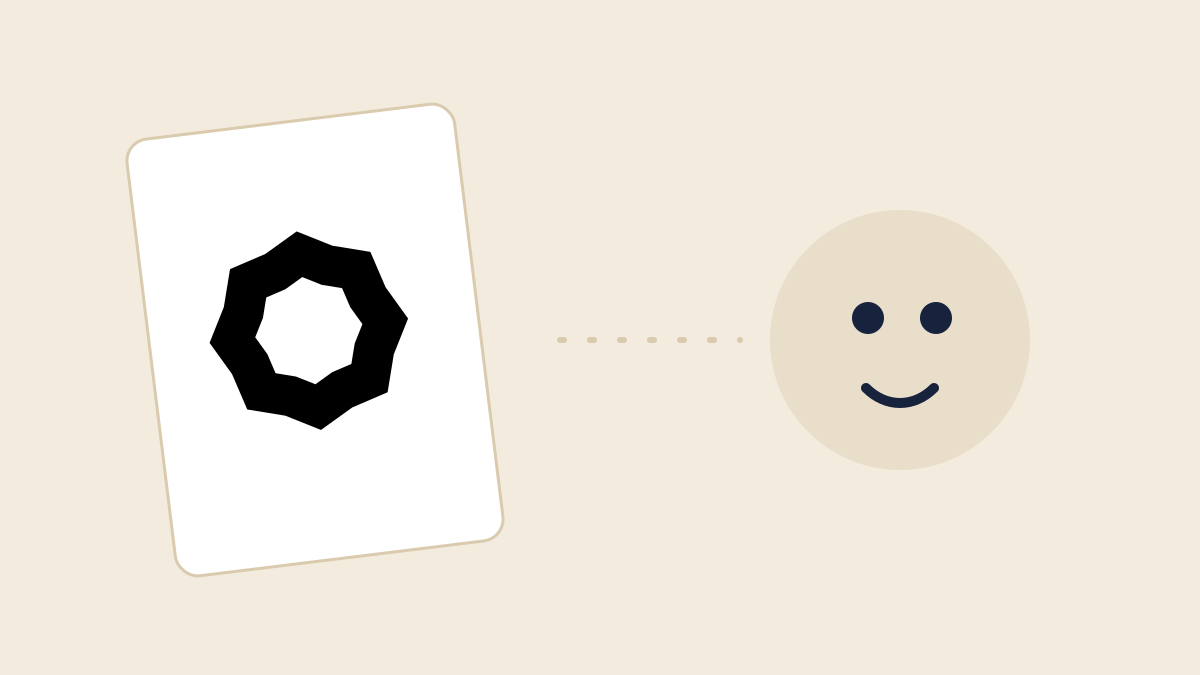
What a newborn actually sees
Not very much, and not very far. Understanding the first eight weeks of visual development changes what you put in front of your baby.
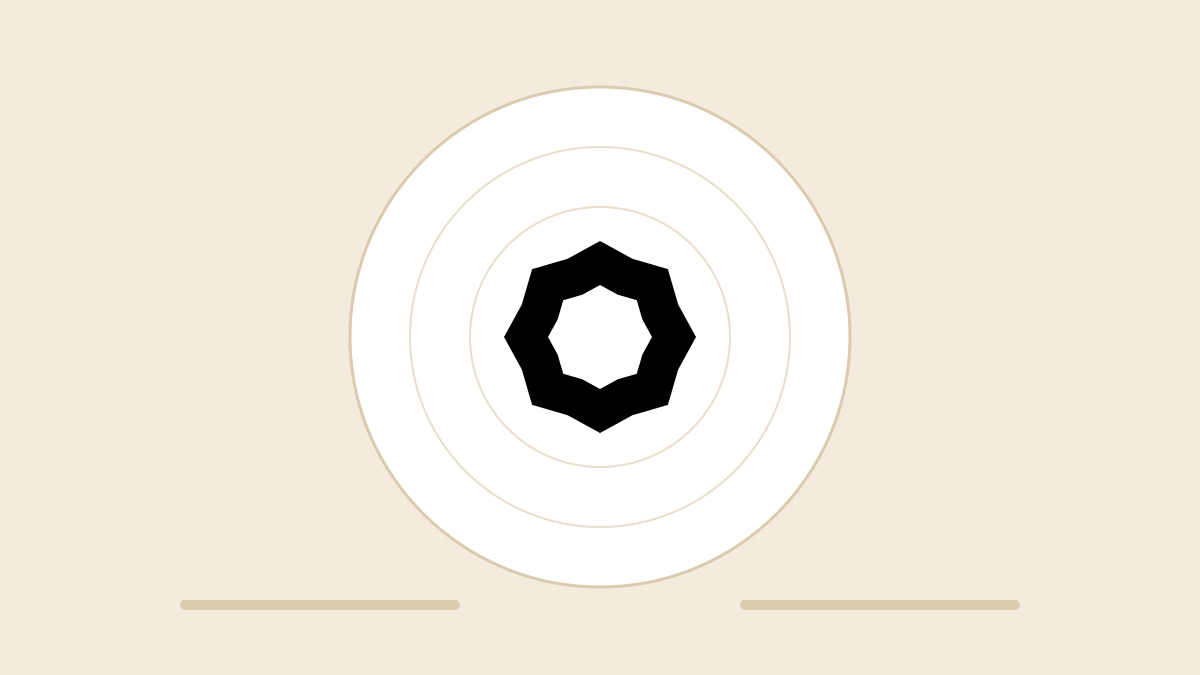
A newborn's visual acuity is somewhere around 20/400. If that number means nothing to you, here is what it means in practice: the world beyond about thirty centimetres is a soft blur, and colour barely registers at all.
This is not a defect. The visual cortex is still wiring itself, and it does that wiring in response to what it receives. Contrast is the signal it can actually use — the sharp boundary between light and dark is the one thing a newborn eye resolves cleanly. Everything else is noise.
This is why high-contrast black and white cards are not a gimmick. For the first two months they are close to the only visual input a baby can meaningfully process. A pastel mobile in soft mint and peach, hung a metre above the cot, is invisible.
The working distance
Thirty centimetres is roughly the distance from your baby's eyes to your face when you hold them. That is not a coincidence — it is the distance evolution optimised for. When you show a card, hold it there. Not across the room, not at arm's length.
Watch for the moment the eyes stop drifting and lock on. That fixation is the whole event. It might last four seconds. Four seconds of a newborn deliberately holding their gaze on something is real work, and when they look away, they are done. Put the card down.
What changes, and when
Around eight weeks, colour vision starts to come online, and red usually arrives first. By four months, depth perception begins. By six months, colour vision is close to an adult's and acuity has improved enormously.
The cards should change as the eyes do. That is the entire premise of a staged set.